
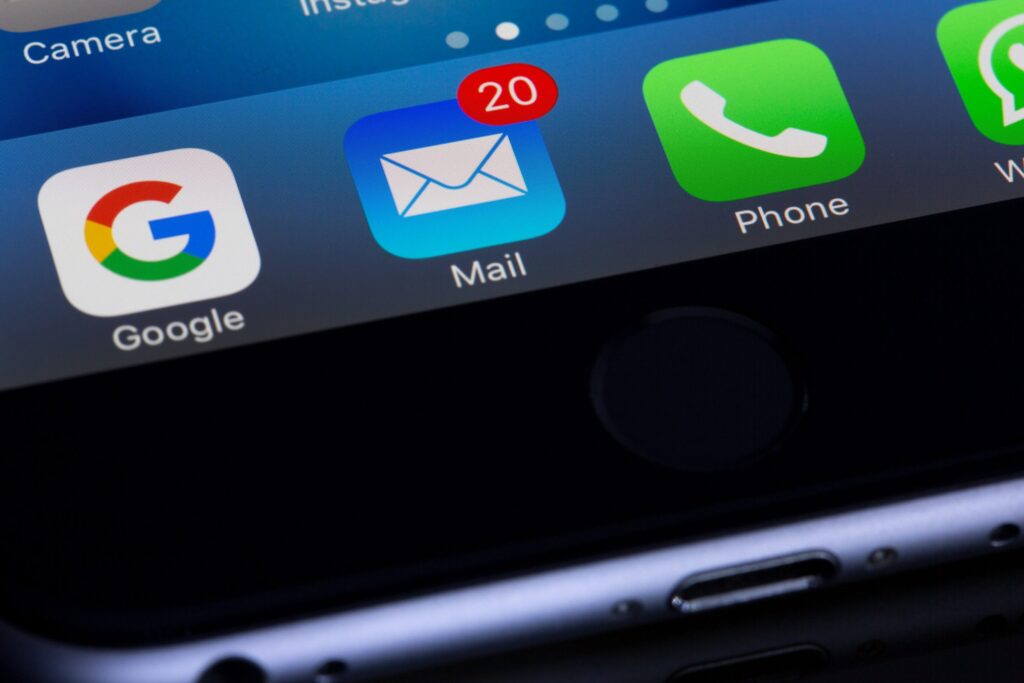
Far from being dead, email marketing has revolutionised the way companies engage with their customers around the world. Whether in its more traditional form as an after-sales service or, increasingly, as a series of content targeting strategies aimed at deep loyalty and brand identification, email marketing is constantly reinventing itself and growing.
According to a study published in Statista[1] By the end of 2021, the global email marketing market was valued at $7.5 billion in 2020, and is forecast to pass the $10 billion mark by 2023. So how can you ride the email marketing wave?
- Define your audience:
As with any aspect of any aspect of marketing, knowing your audience is absolutely critical. You must know who you are writing to on a much deeper level than simple geographic or age data: you must know what they like, what social networks they use, what their interests are, what they are passionate about. Only then will you be able to send relevant content that connects with your customers to the point that, ideally, they will look forward to your next email.
- Subscribing should be easy:
And so should unsubscribing. Both cases (subscribing and unsubscribing) revolve around the same thing: it is increasingly important for users and customers to have control over their data and content. Thus, when subscribing, make sure to ask for as little data as possible (ideally name and email address); at the same time, it is good practice to include the option to unsubscribe at the end of each email.
- Get closer to your customers (but not too close):
Personalising your email marketing campaigns can go much further than simply segmenting which emails each particular group of customers receives: name tags, special offers and discounts on birthdays, product recommendations, and personalised notices (cart abandonment, for example), among others.
But it is important to draw a line and not go too far, because if we take personalisation too close to the customer, it can become strange and end up generating rejection.
- Automate your email marketing strategy:
In any business, consistency is more than the key to success, it is its most basic requirement. Nowadays, there are plenty of tools to automate the emails we send to customers. A correctly automated email marketing campaign guarantees confidence and, in turn, an image of seriousness and guarantee, in the customer.
- Measure your results:
Measure, measure, measure. The reality is that if you don't measure your results, you will be working blind. You must be able to determine in each email marketing campaign what works and, just as valuable, what doesn't: what subjects, what senders, what buttons, what form of content, what length of text, what dates and what times, everything you can measure will help you fine-tune your campaigns to achieve ever higher rates of success, translated into sales and loyalty.
For the time being, it does not look like email marketing is going to stop growing: it is a highly effective tool with a relatively low investment cost. That's why, as with everything in the business world and, above all, the Internet, the sooner you ride the wave, the better you'll be able to surf it.
[1] https://www.statista.com/topics/1446/e-mail-marketing/
 English (UK)
  Español