
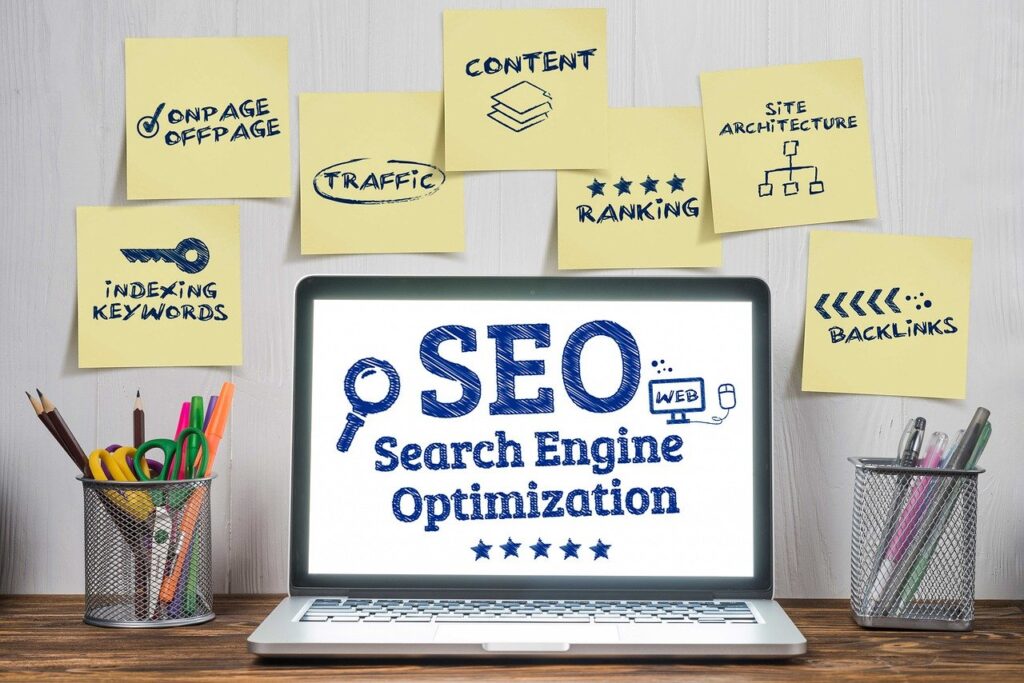
Nowadays, product descriptions serve not only to explain to your potential customers about the products you sell, but also as SEO opportunities for keyword entry.
With these keywordsBy using the SERP, or keywords, you can increase the chances of your brand's website ranking in the SERP, improving the overall route through which your customer reaches you.
Below is a guide to relevant tips for the use of this trend:
What are SEO product descriptions?
As the name implies, SEO descriptions are nothing more than online product descriptions made with SEO best practices in mind, while implementing long tail keywords.
Like traditional SEO, this practice is done in order to maximise the potential ranking of the piece in the SERPs of interest.
This, without neglecting the objective of offering better and more relevant user experiences, through easy to read, better organised, more user-friendly web pages, etc.
In this respect, the first tip for good drafting of SEO product descriptionsThe same would apply to the meta descriptions, and the rest of the descriptive content should be left for other spaces such as catalogues, e-books and/or technical data sheets.
Tips for writing SEO-optimised descriptions
Here are some key tips for writing SEO product descriptions.
1. Know your target audience
You should start by asking yourself, what demographic group does your target audience belong to and what does their shopping behaviour tell you about them?
Start by deepening your knowledge of your current customer base, and then supplement your findings with related research, such as your competitors' target audiences, consumer surveys and other similar means.
2. Know the SEO tactics at your disposal
As we have already mentioned, the basic concepts for SEO content also apply to product descriptions, so it is important to know them well.
In this regard, ensure standards such as making your descriptions clear, useful and concise - getting straight to the point - and avoiding the use of duplicate content, even if it is yours from the same website.
It will also be important not to overload the pages with keywordsto keep things clear for search engines and users alike, while facilitating adaptability to mobile devices.
3. Choose well the place and mode of your keywords
It starts with an exhaustive round of keyword research, following parameters such as the selection of the keywords to be used:
- The search volume
- How easy or difficult it will be to rank for that keyword.
- The number of related terms, or long tail keywords, could fit the description.
Once you have chosen your keywords to use, you will need to know how to use them intelligently to achieve optimal results.
Faced with the latent risk of overloading descriptions, focus on implementing keywords in those places where they will help you the most. Thus, some of the most effective places for their insertion include:
- The URL of the page
- The alt-text tag, or alternative text tag
- The title of the product
4. Add a clear call-to-action (CTA)
All landing page must include a clear call to action, the same being the case for product pages.
Clarifying what you want people who visit your product to do next, while lubricating the critical step in the sales cycle from thought and decision to the point or moment of purchase.
In this regard, you will need to decide carefully where you will place your call-to-action on the product page, choosing your words carefully and making sure that any additional visual elements you include (such as coloured buttons) encourage the decision you want the visitor to make.
5. Write with a focus on the emotional and practical benefits of your product.
Despite knowing about your product you will probably never fall short in specifications and technical features about the benefits of your product, the truth is that such descriptions will not help your product's positioning or better understanding by the average consumer.
While it is important to ensure the availability of such technical data, the real key to capturing customers' attention through your product is to write descriptions that show how it solves a problem or situation - emotional, practical, or mixed - that troubles the consumer.
How will this product improve your life, make your life easier, more meaningful or less regretful?
In this sense, yes, it is very important to inform the customer with which features your product comes to the table. However, such information should be explained in a way that it is read as a direct benefit for their life.
 English (UK)
  Español